By Erin Thomas
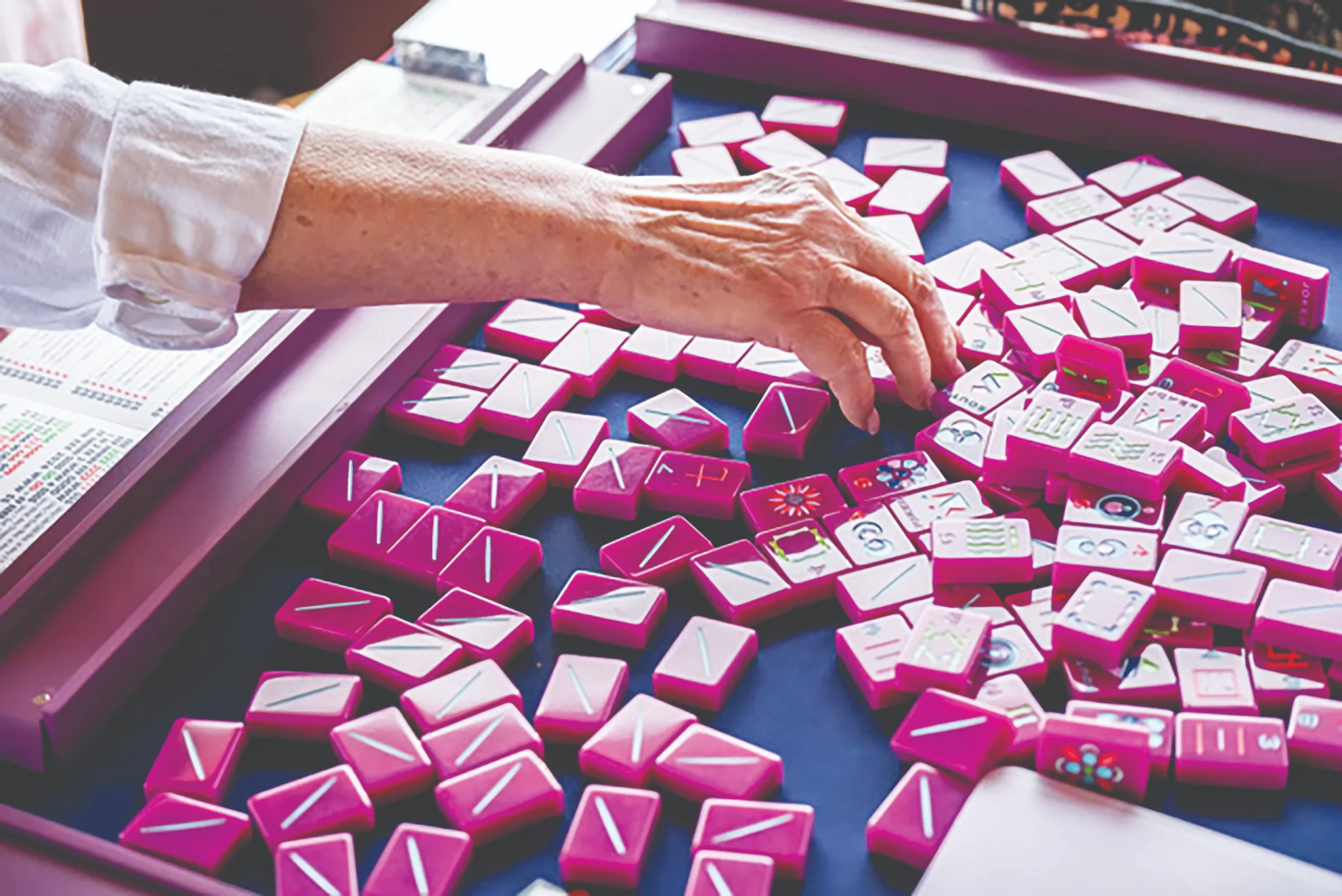
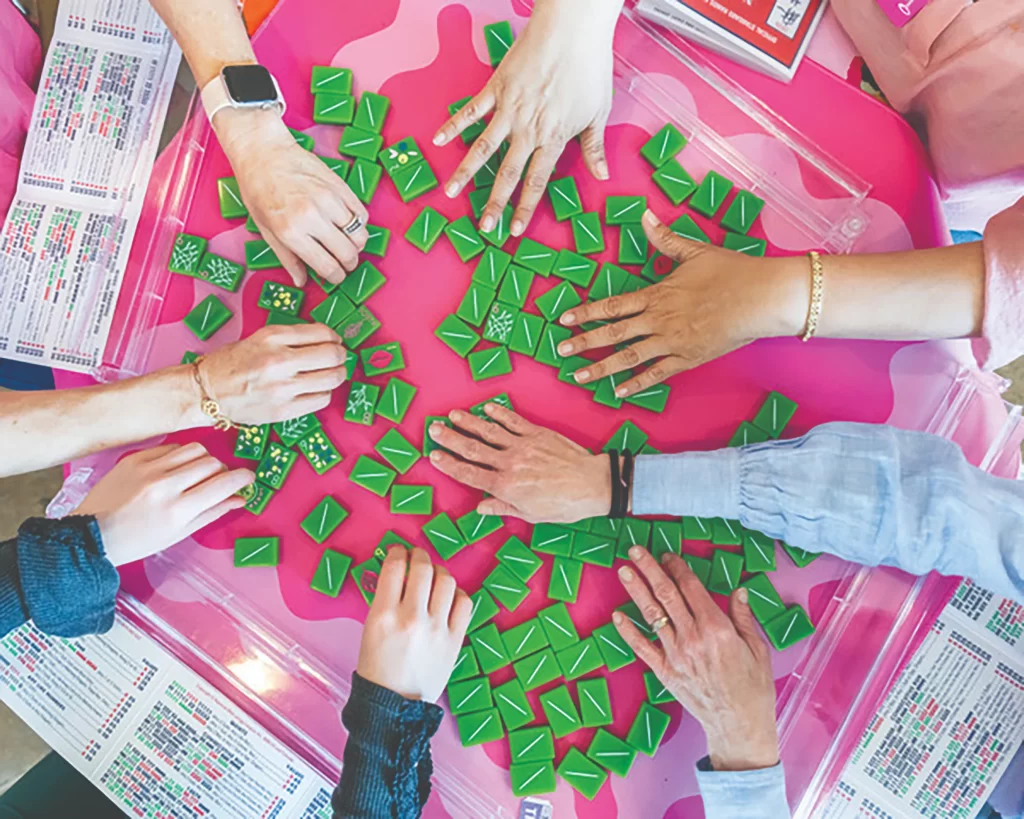
The tiles clack, the chatter builds, and suddenly the table is alive—this is the unmistakable energy of American mahjong, a game that pulls people in and keeps them hooked for hours. Whether you’re chasing a winning hand or just there for the laughs, every round feels like its own little event. It’s not just a game you play—it’s one you experience.
The History of Mahjong
Mahjong originated in China in the 19th century, most likely during the late Qing dynasty. Played with tiles, mahjong blends strategy, skill, and a touch of luck. In its earliest days, mahjong wasn’t just a game—it was a social ritual. Played in homes, teahouses, and courtyards, it brought family members, neighbors, and friends together for hours at a time. Over time, regions across China developed their own distinct rules and styles, giving the game a rich diversity of play.
Mahjong arrived in the United States in the early 1920s, amid a wave of fascination with Asian culture. One key figure in its introduction was Joseph Park Babcock, who was introduced to and played the game while in China. He later simplified the rules for Americans.
He marketed the game as “Mah-Jongg” and published a guide titled “Rules of Mah-Jongg,” helping to spark widespread interest. The game quickly became a nationwide craze, particularly among affluent Americans, Jewish women, and Air Force wives. During this early period, most people in the U.S. were still playing versions that closely resembled the original Chinese game.
A Cultural Phenomenon
By the mid-1920s, mahjong had exploded into a full-blown cultural phenomenon in the United States. What started as a curiosity quickly became the game to play, with department stores racing to stock imported sets that often sold out as fast as they arrived. Elegant boxes filled with beautifully crafted tiles became coveted items, signaling sophistication and worldliness to those who owned them.
“Mahjong parties” became a social trend, drawing guests eager to learn—and just as eager to be seen playing. But with the game spreading so quickly, many players were learning from friends rather than learning the formal rules, leading to a whirlwind of variations, misunderstandings, and conflicting styles. The result? A glamorous but chaotic craze that ultimately set the stage for the need to standardize how the game was played.
Standardizing the Game: The Rise of American Mahjong
While the game spread rapidly, the rules and styles varied widely depending on who taught it. Over time, most of the variations faded apart from two versions.
One was the Wright-Patterson style, developed by spouses of Air Force officers stationed at Wright Field in Ohio. The other emerged in 1937, created by a group of Jewish women in New York City.
They accomplished what many others had not: they collaborated to standardize the rules of the emerging game and built consensus around how it should be played. From their efforts, the National Mah Jongg League (NMJL) was formed. American Mahjong now relies on a card of official hands that is updated annually by the NMJL. Today, the game is played across diverse communities and is widely known as American Mahjong.
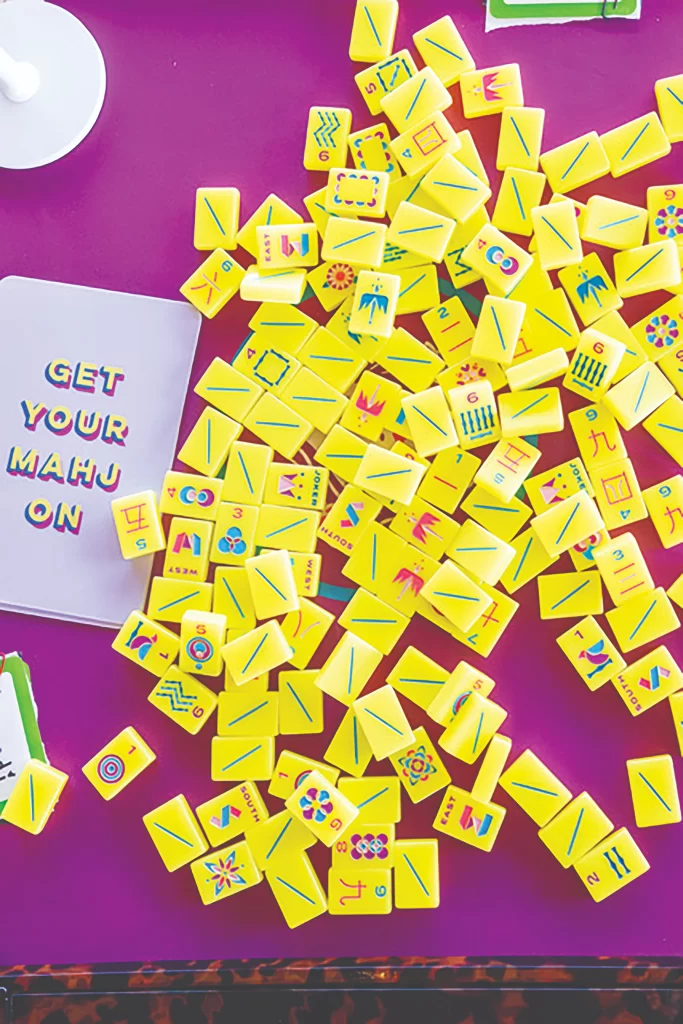
The Tiles: Where Art Meets Play
Early tiles were hand-carved from bone, bamboo, or ivory and often featured intricate, symbolic designs reflecting Chinese culture, folklore, and social values. Today, tiles are made from a variety of materials including acrylic, melamine, and other plastics.
American Mahjong utilizes 152 tiles. The suits, each representing money in their own way, are:
Dots
Bamboos (Bams)
Characters (Craks)
The 1 Bam features a bird, traditionally a sparrow or peacock. The word mahjong loosely translates to “sparrow” in Chinese, a nod to the lively sound of the tiles—their clacking and shuffling echo the chatter and flutter of sparrows in motion.
The suits (Dot, Bam, and Crak) are numbered one through nine, and there are four of each tile. Each suit includes a Dragon: White (or Soap), Green, and Red. The Dragons represent the virtues of the game: honesty, righteousness, and wealth.
Winds (North, East, South, West) represent the cardinal directions. In mahjong, we call the dealer East. “East” is considered the dealer because the game rotates counterclockwise, much like the movement of winds, and East represents the starting point—similar to how the sun rises, symbolizing beginnings.
American Mahjong uses eight Flowers. Typically, these tiles depict different flowers, seasons, or other natural elements. And in true game form, American Mahjong has wild tiles! A Joker can be used to represent any tile in a Pung (a meld of 3 like tiles), Kong (a meld of 4 like tiles), Quint, or Sextet. Jokers are a defining feature of American Mahjong.
Choosing Your Set
As the game spread and evolved, so did tile design. When purchasing tiles, always do your research:
Play before you buy: Ensure the artwork and colors are easy to read.
Quality matters: While layered tiles are cost-effective, single-layer tiles are best for long-term use.
Local expertise: In DFW alone, there are more than five American Mahjong tile companies, making us a hot spot for the popular game.
More Than a Game: Mahjong Builds Community
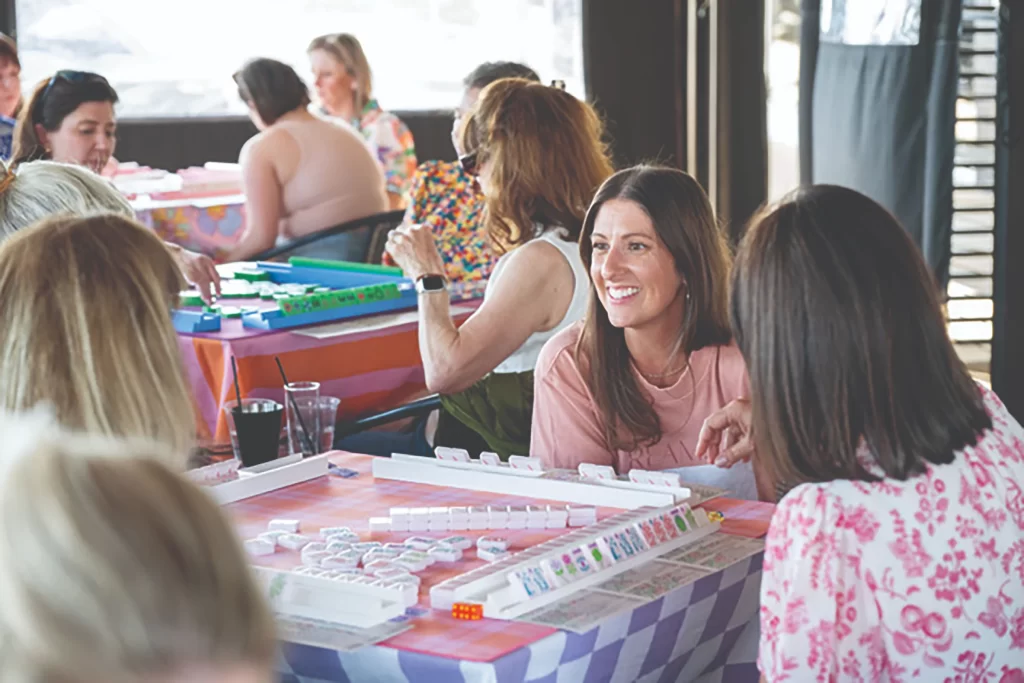
The game is often passed down through families and friend groups, creating a sense of community and belonging. It also naturally encourages inclusivity, as players of different ages and backgrounds can sit at the same table, learn from one another, and build relationships over time.
Mahjong is having a moment again because of what people are craving right now: real, in-person connection. The game brings people together around a shared rhythm of play, conversation, and tradition. Mahjong clubs have surged, and mahjong studios, events, and social leagues are popping up across the country.
Places to Play Mahjong in Richardson
Free Locations:
Lockwood District: Lockwood Distillery, Oak Highlands Brewery, Las Lomas
The Fifth in Canyon Creek (patio)
Cafe Gecko at Campbell and Coit
La Madeleine at Campbell and Coit
The Richardson Public Library
Central Market
Pay to Play:
Vivi’s Richardson ($$)
Bespoke House of Mahjong (automatic tables, $$)
Bird Bam Boutique ($$)
Peace Love Mahjong ($$)
Meet Erin Thomas, Founder of Mahj080
Erin Thomas, founder of Mahj080 and lifelong Richardson resident, is redefining the game with bold color, modern flair, and a kind energy that’s completely contagious.
Whether you’re a total beginner or a seasoned pro, Erin creates space where everyone feels welcome and confident. By day, Erin’s a procurement leader; by night, she’s bringing people together—one game at a time.
Connect with Erin:
Instagram & Facebook: @mahj080
Email: erin@mahj080.com