
Your Home Is Talking to Your Brain
Tell me if this sounds familiar: You walk into one room in your house and immediately feel relaxed.
You walk into another and think, I can’t be in here.
Maybe it’s the pile of shoes you have to step over. The overhead light that feels a little too bright. Or maybe there’s another room you always gravitate toward … you know, the one with a view of the trees and the chair you’ve kept ten years too long that, for whatever reason, just makes you feel good.
Turn out, there may be a reason for that.
Our surroundings affect us physically, emotionally and physiologically, often without our consciously realizing it. And a growing body of research is exploring exactly that relationship.
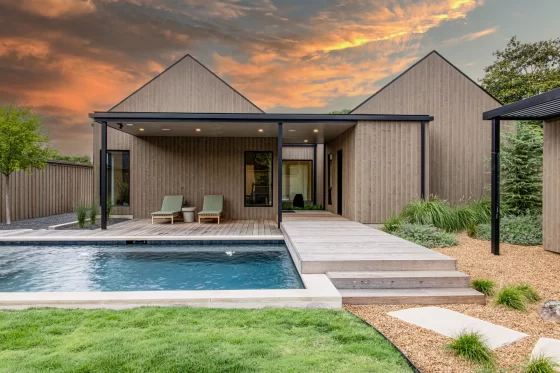
At McDougal Clouse, we think about this from the beginning. How will natural light move through the house? How does the home connect to the landscape and neighborhood? These aren’t just aesthetic decisions.
Welcome to Neuroarchitecture and Neuroaesthetics
The terminology may sound new, but the idea really isn’t.
Neuroaesthetics was formally named in 1999 by neuroscientist Semir Zeki as a field exploring how the brain experiences art and beauty. Today, researchers continue to study how we experience the world around us, and architects and designers are translating that research into the built environment.
In other words, design isn’t only about what we see. It’s about what we experience.
How Early Research Shaped Today’s Thinking
I was introduced to many of these concepts in the 1990s while studying psychophysiology under Dr. Mardelle Shepley at Texas A&M University (whoop!). At the time, much of the research connecting our physical environments with human responses was focused on healthcare.
Researchers were asking questions such as:
- What difference does natural light make?
- What happens when a patient can see nature?
- How do noise, privacy, color and the physical environment affect the human experience?
Today, that thinking is increasingly making its way into our homes … and we’re excited about it!
Because if there is anywhere we should be thinking about well-being, shouldn’t it start at home?
Designing for How You Want to Live
For years, residential design has been heavily influenced by what we see. We save the beautiful kitchen. Pin the perfect living room.
But good residential design should begin with a different question:
How do you want to live?
Everyone answers that differently.
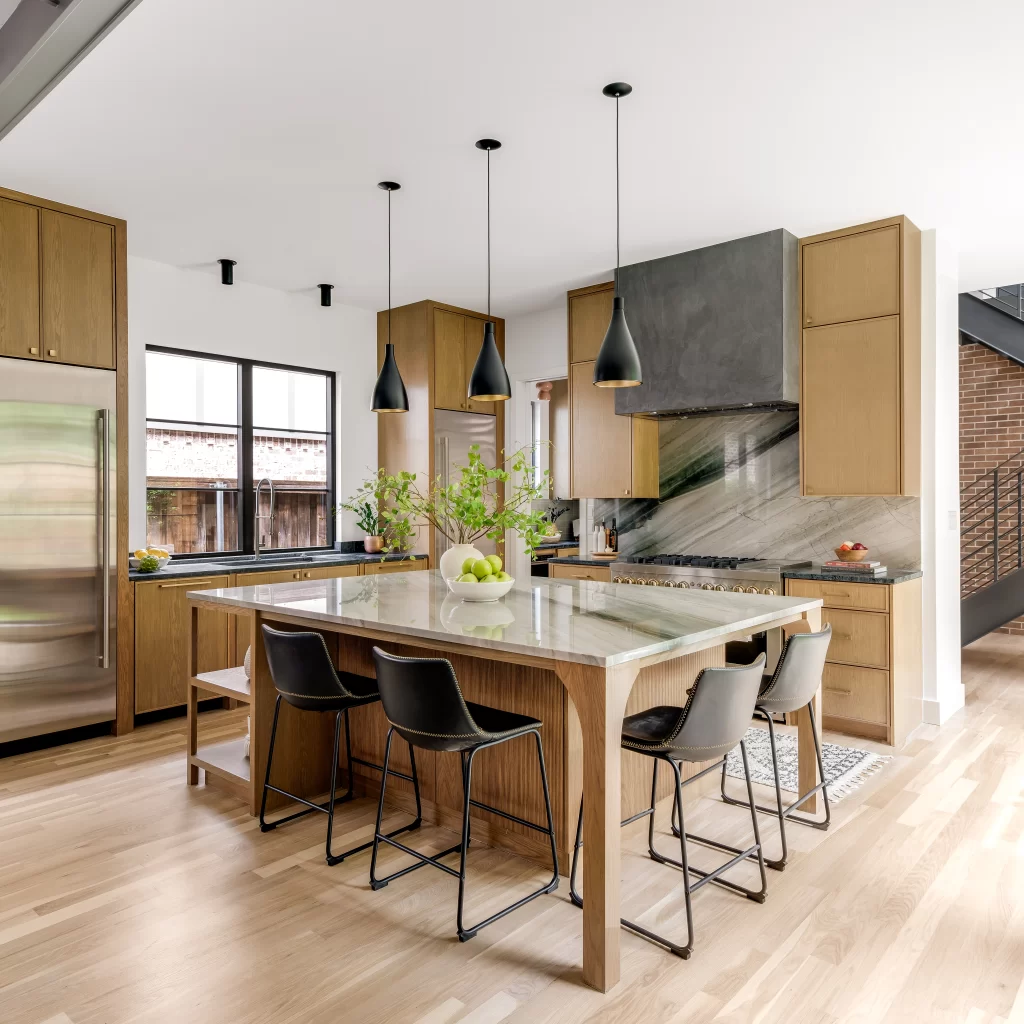
Do you need your home to help you slow down at the end of the day? Do you love having ten people gathered around your kitchen island? Does your home create moments that tell your brain you are transitioning from one activity or environment to another?
Those answers should influence design long before we start talking about the perfect paint color.
What Research Says About Happiness at Home
There is research behind this more human-centered approach.
The 2019 GoodHome Report surveyed 13,489 people across ten European countries and found that 73% of people who were happy with their homes were also happy with their lives.
Perhaps even more interesting was what contributed to that happiness.
The size of the home mattered less than many might assume. Feelings of pride, comfort, identity, safety and control were much more closely connected to happiness at home.
In other words, bigger isn’t necessarily better.
Maybe your house should look a little more like you.
Moving Away from Perfection
One of the things I hope we see more of in residential design is a move away from perfection.
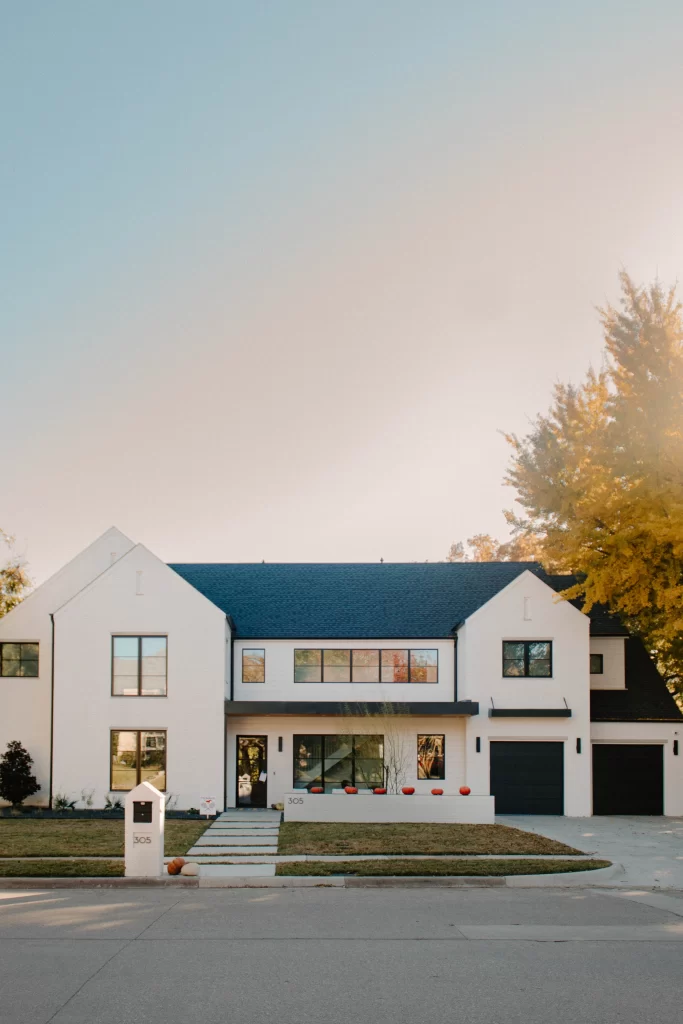
A home doesn’t need to look like a showroom or your neighbor’s house. It should support your well-being, tell your story, and respond to its surroundings.
Researchers in neuroaesthetics are studying how our brains and bodies respond to:
- Light
- Sound
- Color
- Nature
- Sensory experiences
- Spatial complexity
Not simply spaces but places with boundaries.
Changes in location, direction, or scale can signal that one event has ended and another is beginning. A hallway becomes meaningful, not a waste of space.
But there isn’t one universal recipe for the perfect home. Our responses are also shaped by culture, memory, personal experience and preference. That’s where a design professional comes in.
Wellness-Centered Design at Home
We’re seeing this playout in our homes.
Increasingly, clients are asking us to incorporate wellness from the beginning.
Examples include:
- Filtered water systems
- Steam showers
- Saunas
- Cold plunges
- Dedicated spaces for exercise
But wellness-centered design is bigger than adding a sauna. It’s all connected.
It can be morning light that helps establish the rhythm of your day. Better acoustics in a house full of people. Materials that feel good to touch. Or a floor plan that eliminates small frustrations you encounter over and over again.
Our Homes Shape How We Live
The growing interest in residential wellness and the emerging science around neuroarchitecture point toward the same larger idea:
Our homes aren’t passive backdrops to our lives. They quite literally shape how we live.
And sometimes the most meaningful wellness feature isn’t something you buy at all.
When we meet with a client, what may look like a casual conversation is actually observation and discovery.
We’re learning:
- How they live
- What frustrates them
- What they value
- How they want their home to feel
From there, those very human needs begin to inform proportion, scale, natural light, views, circulation, acoustics, color, texture, materials and the relationship between the house and the landscape.
Some responses to our environment are rooted in shared biology. Others are deeply personal.
Good design considers both.
It connects us to one another and to the surrounding environment.
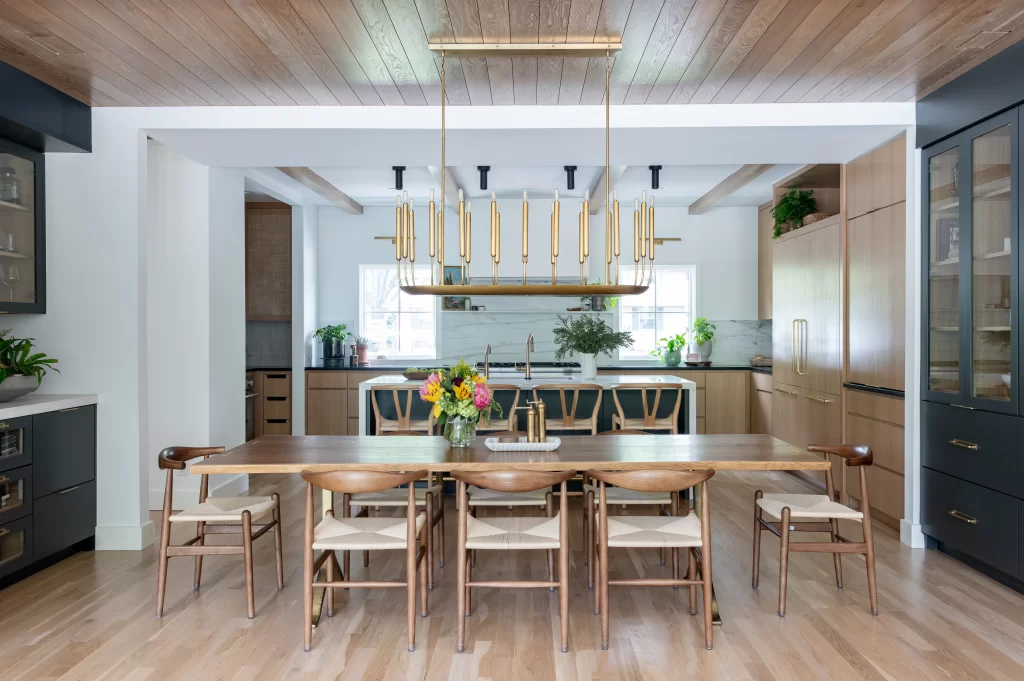
Good Design Starts by Noticing
Good design starts by noticing.
When we have the opportunity to design a home from the ground up, the goal isn’t simply to create something beautiful. It is to create something memorable.
Something that reflects the people who live there while responding thoughtfully to the streetscape, natural surroundings, patterns of light and views.
Trends will change. But the homes that support the way we live and connect us to the people and things we love are the homes we remember.
They aren’t the most perfect.
They’re the ones that feel personal.
We call them “homes with a soul.”
And they are impossible to replicate.