
Letter from the Editor for June Issue (Foodie)
Summer is here and honestly, is there a better time to sit out on a patio with good food, cold drinks, and your favorite people? Here in Richardson, we’ve got plenty of places to do just that. This issue is all about celebrating the local food scene that makes our city such a fun and flavorful place to explore. Richardson is packed with flavor.
Healing The Future

[et_pb_section admin_label=”section”] [et_pb_row admin_label=”row”] [et_pb_column type=”4_4″][et_pb_text admin_label=”Text”] Innovation and Impact at UTD’s Texas Biomedical Device Center Dr. Michael Kilgard and colleagues blazing a new trail in brain-based therapies By Patti Otte When Mike Kilgard was young. he spent a lot of time in nature and called the water near his house the “bayou” It was little more than a drainage ditch, but it abounded with fish, turtles, snakes. insects and birds and the experience of growing up near “the bayou” sparked within him a lifelong curiosity about the natural world and all its wonders. States Kilgard. “Every day I was there. I would see something different and learn something new. My mom was a teacher and my dad was an engineer and both encouraged my interest in unsupervised exploration.” Fast forward decades and that same inquisitive, adventurous young man is now Michael Kilgard, Ph.D.. Margaret Fonde Jonsson Professor of Neuroscience in the School of Behavioral and Brain Sciences at The University of Texas at Dallas and executive director and chief science officer of the Texas Biomedical Device Center at UTD. Dr. Kilgard and his team are pioneers in the field of vagus nerve stimulation (VNS) as a means of rewiring neural circuits to improve recovery from serious psychiatric or neurological conditions. THE TEXAS BIOMEDICAL DEVICE CENTER AT UTD In 2012 UTD’s Texas Biomedical Device Center (TxBDC) was established thanks to generous donations from Texas Instruments and a private donor Since its inception, TxBDC colleagues have ‘published more than 100 peer- reviewed publications, participated in multiple successful clinical trials for Targeted Plasticity Therapy, spun out four new advanced biomedical technologies to manufacturing companies, and generated an additional $25 million in funding.” according to the university. A recent interview with Dr. Kilgard shed new light on his personal interest in brain-based therapies and their remarkable potential for treating neurological injuries and diseases. Otte: How did you become interested in developing new tools for treating people with neurological and psychiatric disorders? Dr. Kilgard: This is very personal for me. I’ve known people with nearly every neurological and psychiatric disorder-psychosis, addiction. depression. Alzheimer’s, spinal cord injuries, strokes-either as family. friends or colleagues. Although these disorders were once thought to stem from specific genes or brain regions. this turned out to be wrong. These conditions aren’t about chemistry. they’re about wiring problems, which are potentially changeable. Otte: Please help our readers understand in layman’s terms the technology and devices you have developed. Dr. Kilgard: Teachers, therapists. mentors, pastors, and friends help us rewire our brains every day through human connection and interaction. Unfortunately, sometimes the brain gets stuck and we cannot make the needed changes to be fully healthy. Scientists and doctors are developing new tools to help us get through these situations. Reducing disability is our primary focus and the vagus nerve is our primary tool for brain-based therapies as it connects to all the body’s o organs and promotes relaxation. When you stimulate the part of the vagus nerve that connects to the brain, it briefly activates the brain. The brain momentarily perceives a disconnect. triggering a brief burst of chemicals in the brain lasting only half a second. These chemicals help the brain to change its wiring. Unlike prolonged effects from substances like amphetamines, this short burst signals to the brain that something significant has occurred. It doesn’t feel rewarding or aversive but does prompt the brain to adjust and pay attention. These chemicals are crucial for forming new memories, learning skills and creating new neural connections. “Teachers, therapists, mentors, pastors, and friends help us rewire our brains every day through human connection and interaction. Unfortunately, sometimes the brain gets stuck and we cannot make the needed changes to be fully healthy. Scientists and doctors are developing new tools to help us get through these situations.” -Dr. Michael Kilgard Our team has developed implantable vagus nerve stimulators that reward the brain when someone does the right thing, such as staying calm, moving their hand or holding a memory longer. Otte: What is the status of this technology and how is it used in real-life applications? Dr. Kilgard: The first generation of our vagus nerve stimulation system, called Vivistim, was invented at UTD and is now being used in an FDA-approved treatment to help stroke patients. These FDA-approved Vivistim devices are now made by a company called 30 RICHARDSON LIFE MAGAZINE MicroTransponder. Inc.. which is a UTD spinoff company. At TxBDC, we have created a vagus nerve stimulator that is 50 times smaller than the Vivistim, making it cheaper. easier to implant and more comfortable. These improvements are key to scaling this technology to tens or hundreds of thousands of people with serious conditions. Experimentation involves patients getting the implant and then working with a physical therapist who evaluates what they can do, focusing on small movements they can manage such as partially turning their hands. The therapist stimulates the nerve when they exceed their personal baseline. with the goal of eventually turning their hand fully. for example. We have also developed a device that measures movement-like how hard someone squeezes or turns their hand-and provides feedback directly to specific neurons. This allows at-home therapy that can target and strengthen the neurons active during correct movements, much like perfecting a tennis serve or violin note, to drive better performance and recovery. Otte: How is your work game-changing for the field of brain-based therapies? Dr. Kilgard: The key innovation is shifting the focus from brain areas-of which there are only a few hundred-to individual synapses, of which there are trillions. It’s a big change in perspective. Our goal is to enable targeted rewiring of the specific parts of the brain that are malfunctioning, without affecting the healthy parts. This is an incredibly challenging task that took us 30 years to figure out. Now that we have the technology platform, we can explore how to use it to change the nervous system in a variety of conditions On a side note, many, many
Community News
Symphony Of Secrets By Brendan Slocumb Richardson Reads One Book is celebrating its 20th anniversary and Brendan Slocumb’s Symphony of Secrets has been chosen as this year’s RROB selection. Slocumb’s novel, published in 2023, was praised as one of last year’s best books by The Washington Post and NPR among others. The novel is split between two time periods: present-day and the period of 1918-1936. In the past, struggling young musician Frederick Delaney tries to make a name for himself in New York, performing with a jazz band and working at a music publisher. He meets Josephine Reed, a homeless woman who hears beautiful music surrounding her everywhere she goes. With talented Josephine as his inspiration, Delaney finds his career taking off. In present-day New York, Bern Hendricks, an expert on the now-famous composer Delaney, has been given a dream opportunity. He’s been asked by the Delaney Foundation to help them authenticate a piece of music that appears to be from Delaney’s long-lost opera. Thrilled at the chance to work on Delaney’s masterpiece, Bern and his tech-savvy friend Eboni soon learn that Delaney’s life is a complicated one. Slocumb takes the reader on a journey with Bern and Ebony to discover the truth of Delaney’s past. Raised in Fayetteville, NC, Slocumb is a music education graduate of the University of North Carolina at Greensboro. For the past two decades, he has been a K-12 public and private school music educator and serves as an educational consultant for the Kennedy Center in Washington, D.C. He published his first novel, The Violin Conspiracy, in 2022 and is now at work on his third, to be published in early 2025. RROB will host Slocumb for an author lecture and book signing at First United Methodist Church Richardson on Tuesday, September 24. Digital and paper tickets will be available beginning Tuesday, September 10, at 9:00 am. Symphony of Secrets is available at the Richardson Public Library in regular print, large print, and digitally via the library’s website. For more information about RROB and its associated special events, call 972-744-4350 or visit http://cor.net/onebook. Richardson Reads One Book is also on Facebook at http://facebook.com/RROBTX.
Network Launches
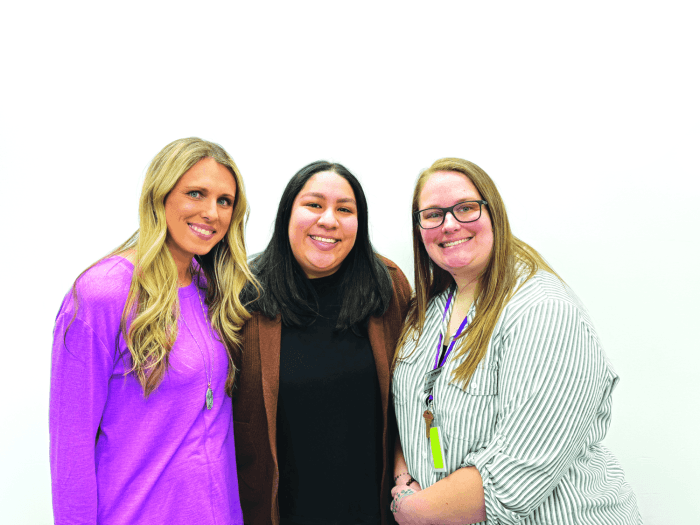
Network of Community Ministries New MENTAL HEALTH and WELLNESS SERVICES By Patti Otte Network is responding to alarming mental health statistics in Texas by introducing mental health and wellness services to their existing programming. This initiative aims to address the gap in mental health care accessibility, providing compassionate and evidence-based services at no cost to those in need. In Texas, 3.3 million adults are diagnosed with mental health conditions and a staggering 55% of adults with mental health conditions cannot or do not seek the necessary treatment. Key components of the program include the addition of three full-time mental health professionals — a Qualified Mental Health Professional (QMHP)as a Clinical Case Manager and two Li-censed Master Social Workers (LMSW)for individualized therapy. Network has also partnered with a contract psychiatrist to provide wraparound, multi-disciplinary care. These services are offered at no cost, and for as long as services are needed. Comprehensive screenings for depression and anxiety, as well as a Self-Sufficiency Survey, help to identify specific needs. Additionally, Parent Café, open to all neighbors, is a program that provides a safe space for parents to enjoy a meal, take a break, and discuss their success-es and challenges among a group of peers. While parents participate in the program, childcare activities are offered. Adding mental health services to Network’s existing program is de-signed to break down barriers to access, offering free, unlimited counseling sessions to those who need it most. Funding from the City of Richardson and the Ruth Ann Marmion Charitable Fund makes this program possible. For more information about Network and its mental health and wellness services pro-gram, please contact Amanda Pels, Chief Strategy Officer, at 972-234-8880 ext. 109 or email her at apels@thenetwork.org.
Altrusa International of Richardson, Inc.

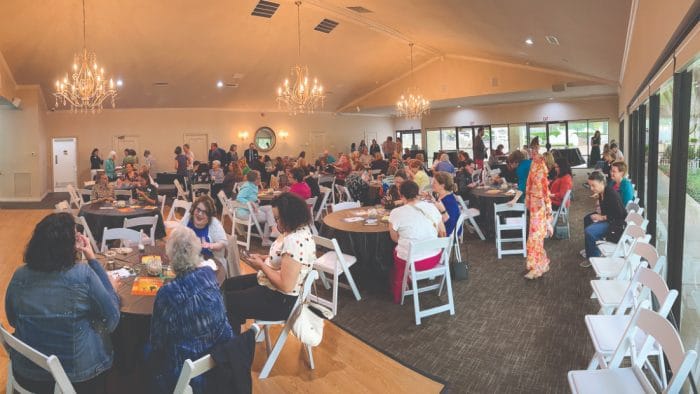
By Jean Stuart and Patti Otte Nationally-renowned biochemist and cancer researcher Helen Dyer once stated, “Volunteering is the voice of the people put into action. These actions shape and mold the present into a future of which we can all be proud.” A group of women in Richardson lives by that motto. They are members of Altrusa International of Richardson, a nonprofit 501(c)(3) organization operating in the city since 1967. These dedicated volunteers are shaping the future through acts of service and giving. Founded in Nashville, Tennessee, in 1917, Altrusa International, Inc. has 392 clubs worldwide in 19 countries, 36 of which are in Texas. The name “Altrusa” was coined from ALT (altruism) and USA (United States), reflecting the patriotism of the WWI era in America. Altrusa International of Richardson, Texas, Inc. was presented with a charter on May 23, 1967. The club is governed by officers and a board of directors. Currently, there are more than seventy regular members plus emeritus members. Altrusa Richardson hosts the “Outstanding Woman of Today… Builders of Tomorrow” awards luncheon, a fundraiser held annually in the fall. The awards luncheon recognizes the tremendous achievements of working women— women of leadership—who exemplify determination and innovation and have made an outstanding contribution in their field and have “Hearts for Humanity.” Monies raised by the event fund the club’s service projects and contributions for the following year. Altrusa founding a choose Kind library in Kenya Altrusa hosts party at Ability House Altrusan delivering coats to Network Last year alone, among many other altruistic acts, Altrusa Richardson accrued 14,045 hours of service (a $478,343 value if hours were paid). In addition, they funded $13,000 in scholarships and $12,000 in grants to community nonprofits, donated 500 emergency food kits and 270 coats to NETWORK, and set up and maintained 20 Choose Kind libraries in RISD. Altrusa Richardson’s target population is children, elderly, disabled, and disadvantaged persons. Jean Stuart, current vice president who will become president in the 2024-2025 term, adds, “We search for need. We have adopted a home that cares for six adults with disabilities; we celebrate their birthdays with gifts and cake and celebrate/decorate for holidays (i.e. Halloween and Christmas). We call Bingo and hold auctions (with paper money and gifts we provide) at local area senior assisted living facilities. We celebrate Kindness Weekend every April, during which we not only spread kindness but also involve the city and other organizations.” Choose Kind Library funded by Altrusa “It is not enough to be good. Altrusans must be good for something” – Mamie L. Bass, Altrusa’s first national president Preparing gifts to give female veterans Stuart goes on to say, “Altrusa is different because, while we donate some money to others, most of what we do is hands-on, meeting those we are serving, while loving what we do. It seems that all our projects are filled with laughter and camaraderie. We say join us for fun, friendship, kindness, service and community.” The organization hopes to grow and will be hosting ‘recruitment’ events in the next few months. They have many upcoming projects and welcome others to help them better serve the community. Furthermore, Altrusa Richardson is now opening the Grant application process for the year and looking for community nonprofits who might apply for those grants. For more information about Altrusa Richardson, visit http://altrusarichardson.com. Altrusa Richardson Encourages Area Nonprofits To Apply For Grants Altrusa International of Richardson announces that applications are now being accepted for grants to qualifying area nonprofits for the 2023-2024 grants cycle. Grants typically range from $1,000-$1,500. Monies provided by Altrusa grants must be used by awardees for specific projects benefitting the community and disbursed no later than May 31, 2024, unless otherwise reported. A fillable application form and submission instructions are available on the Altrusa website at http://altrusarichardson.com/grants Additionally, reminder letters are being sent to 501(c)(3) recipient organizations who received funding last year. The deadline for submitting a grant application is August 31, 2023. Applications will be reviewed by the grants committee. Funding recommendations will then be submitted to the Altrusa International of Richardson Foundation, which will make the awards. Grantees will receive notification by October 31, 2023. If you need more information about the grant submission process, please contact Grants Committee Chair Mary Shiroma at 214-914-3634 or by email at maryshiroma@outlook.com.
Richardson’s Sesquicentennial

The City of Richardson hosted an exciting Sesquicentennial celebration and Richardson Life Magazine’s summer intern, Reed Granger, covered it. Reed is a rising sophomore at Syracuse University pursuing a Bachelor of Arts in Political Science at the Maxwell School fo Citizenship and Public Affairs and a Bachelor of Science in Photography at the Newhouse School of Public Communications. Reed grew up in Richardson and has deep roots here. Photo credit for this “scrapbook” belongs to Reed, who states, “Richardson’s 150th anniversary celebration reminds me of the experience I had growing up in this city. I think all of us need to encounter the range of individuals I met and organizations I interacted with at the Sesquicentennial. I saw the Richardson Community Band performing songs for all ages, learned about water marbling and cultural harmony from the Dialogue Institute, and watched Mayor Bob Dubey and the CIty Council place items into a time capsule, which will be opened in 2073. Through these images, I hope that you can see the collective love we share for this place we live. On this day, we celebrated our joy, diversity and long-lasting ability to make this city a home for all of its residents. As a photographer, I aimed to capture this unity. The city of Richardson truly is remarkable.”
Richardson Reads One Book
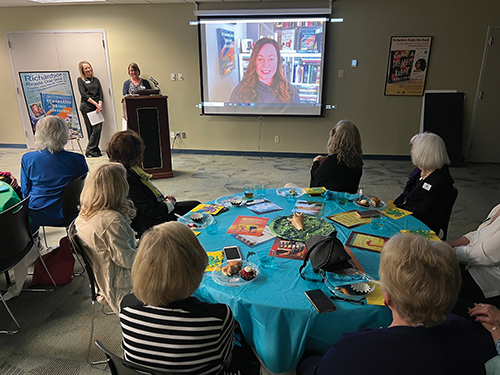
RICHARDSON’S ANNUAL LITERARY EVENT What do these characters all have in common? • A philosophical dog who loves racing in the rain • A Japanese boy and a Chinese girl who fall in love during WWII • Nine people who are trapped in a collapsed building after an earthquake • Four undocumented Mexican American students and two great teachers who enter a robot building contest • A Texas ranger who tries to solve two racial homicides • A clever octopus who brings family members together Hopefully, you’ve guessed it—they are all characters from a Richardson Reads One Book selection—a program that is now in its nineteenth year. Through an engaging author lecture, Richardson Reads One Book aims to: • Stimulate an interest in the pleasure and the importance of reading • Encourage citizens of the richly diverse Richardson community to come together to openly discuss a selected book and the issues it raises. The Richardson Public Library joined with various other organizations in Richardson to hold the first annual Richardson Reads One Book author lecture in September 2004 and it repeats in September every year because it is National Literacy Month This year’s selection, Remarkably Bright Creatures, is a delightful return to the tradition. If you haven’t read the book, here’s a taste from the author’s website: “After Tova Sullivan’s husband died, she began working the night shift at the Sowell Bay Aquarium, mopping floors and tidying up. Keeping busy has always helped her cope, which she’s been doing since her eighteen-yearold son, Erik, mysteriously vanished on a boat in Puget Sound more than thirty years ago. Tova becomes acquainted with curmudgeonly Marcellus, a giant Pacific octopus living at the aquarium. Marcellus knows more than anyone can imagine but wouldn’t dream of lifting one of his eight arms for his human captors—until he forms a remarkable friendship with Tova. Ever the detective, Marcellus deduces what happened the night Tova’s son disappeared. And now Marcellus must use every trick his old invertebrate body can muster to unearth the truth for her before it’s too late. Shelby Van Pelt’s debut novel is a gentle reminder that sometimes taking a hard look at the past can help uncover a future that once felt impossible.” Shelby Van Pelt grew up in Tacoma, Washington, and loved the aquarium at the Point Defiance Zoo & Aquarium from an early age. She lives in the Midwest with her husband and children now, but her debut novel is still set in the Pacific Northwest where Van Pelt grew up. As a literary program that attracts national and international best-selling authors to our city, Richardson Reads One Book is a singular, successful program in our community. Perhaps our 2012 One Book author, Chitra Divakaruni, said it best: “I believe strongly in the power of story in creating community. It is when we learn about the core of the lives of strangers that they become family to us.” Please join us at this year’s Richardson Reads One Book event at First United Methodist Church Richardson on Tuesday, September 26 at 7:30 pm. Free tickets will be available at Heights and Huffhines Recreation Centers and the Richardson Senior Center beginning Tuesday, September 5. Check out our website at http://cor.net/onebook, like us on Facebook @RROBTX, or follow us on Instagram @richardsonreadsonebook. RROB Shadow box event
The Power of Pet Rescue and Ownerships
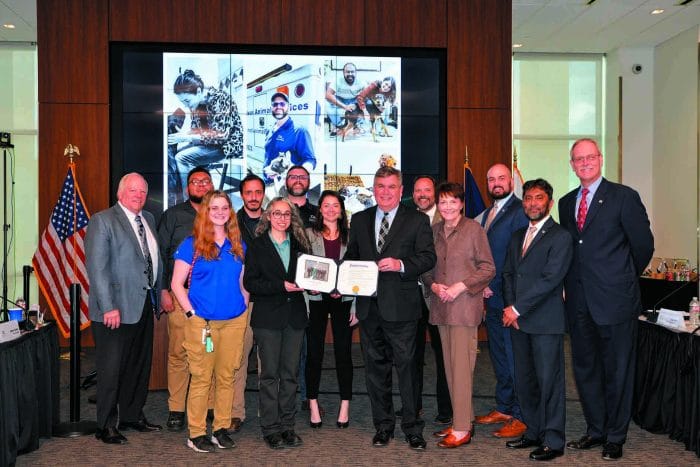
By Nancy McGuire Multiple studies have shown that pet owners reap many physical and mental benefits from their animal friends. Pets offer not only companionship, but also provide a calming presence, help reduce stress and anxiety, and encourage their owners to be physically active. In the case of rescued animals, an extra special bond seems to develop between the two and ‘who rescued whom’ is a phrase heard often among animal rescue groups. Three Richardson-based organizations are rescuing one stray, lost, injured or abused animal at a time. The work they do is demanding and can often take its toll emotionally, but all three rescues are passionate about saving homeless animals. Dallas Street Dog Advocates Although it has ‘Dallas” in its name, Dallas Street Dog Advocates (DSDA) is a Richardson-based rescue. After driving through an area of South Dallas and noticing all the strays, DSDA Vice President Relle Austin came across one dog in particular that tugged at her heart. She coaxed the sickly-looking pup into her car and tried to find a willing rescue, but none would take it. At that moment, Austin realized her calling: to advocate for those dogs who no one, including the typical rescue group, would take. Longtime rescue and foster Elise Bissell and local animal-lover David Maldonado joined Relle in founding DSDA with the mission of rescuing stray and forgotten dogs off the streets of Dallas. DSDA’s staff and facilities are kept minimal so that all funds raised can be used to rescue, vaccinate and spay/ neuter more dogs and cats. They have no kennel space, instead relying solely on fosters willing to act as the bridge between rescue and forever homes. In addition to countless rescues, DSDA also does outreach work in the South Dallas area where so many dogs are dumped. According to Austin, the people in the area who can’t afford the food and vet care necessary to keep their pets in their homes are instrumental in helping DSDA volunteers catch the strays by establishing feeding schedules and routines. They also tell volunteers about the dog’s history. They sponsor spay/ neuter and vaccination clinics as well as pet food drives to support those in need. Although the work is never-ending and can be emotionally draining, Bissell states, “What we have learned from our experience in rescuing dogs off the street is that many of them are highly adoptable. They yearn to love and be loved and deserve to be healthy, happy and have a home of their own.” Austin is driven by the challenge of taking in the most sad and broken animals and providing them the care and love they need to be adoptable pets. “I’m in the rescue business for selfish reasons.” she explains. “The satisfaction and enjoyment from what I do on a daily basis is extremely gratifying.” DSDA Co-Founder Elise Bissell Take Me Home Pet Rescue “One dog, one home, one community, one world. We are all in this together” – Relle Austin, VP, Dallas Street Dog Advocates Also based in Richardson is Take Me Home Pet Rescue (TMHPR), which takes an entirely different approach to animal rescue. Working with a network of other area rescue groups, TMHPR is in constant contact with a myriad of municipal animal shelters in DFW and East Texas to pull dogs and cats believed to be adoptable. Rescue groups such as TMHPR have access to necessary resources such as volunteers, foster homes and media attention that municipal shelters often do not have, thereby making the adoption process easier. TMHPR’s overall goal is to be sure the pets they take in are healthy, sterilized and a good match for their potential adopters. They carefully screen adopters and conduct home visits to be sure the personality and energy level of both pet and potential family are a good fit. Over the last several years, TMHPR has managed to save more than 300 dogs and cats each year. In 2020, TMHPR moved to a new adoption facility at 580 Arapaho Road, which provides more space to host adoption events, has isolation areas for new intakes to make sure no illnesses are spread, and has cat rooms to better house newly tagged felines. While this new facility provides many benefits, TMHPR still relies heavily on fosters to serve as gateways until permanent homes are found for their rescues. Fosters and volunteers are integral to their success in reducing shelter overcrowding and gives the organization the ability to take in more adoptable animals. According to Trish Clark, TMHPR Board Member, volunteer and adopter, “Fosters and volunteers are like gold to us.” She goes on say that “for every foster we bring in, that is just one more animal we can save.” Richardson Animal Services Considered by many to be one of the most well-run municipal shelters in the state, Richardson Animal Services (RAS) takes a different approach in providing animal services but has the same mission: to provide a safe and healthy environment for lost and stray animals. RAS falls under the jurisdiction of Bill Alsup, Health Director for the City of Richardson, but Noura Jammal, the facility’s manager, is responsible for the facility’s day-to-day operations. Noura started working at the RAS sixteen years ago as an animal control officer with no experience and has been caring for the city’s strays ever since. States Alsup, “Noura is a tremendous asset to the City of Richardson, its residents and its pets. Her professionalism and drive for customer service are only exceeded by her passion for animals and their welfare. She has developed many programs that benefit the animals in the shelter’s care and make the Animal Shelter an essential part of the community.” The shelter is open seven days a week (Mon-Fri 10:00 am – 6:00 pm and weekends 12:00 – 5:00 pm), a rarity among shelters who are usually open weekdays only. RAS animal control officers answer calls about strays, make welfare checks, conduct rabies quarantine checks, pick up deceased animals, and complete so
Shadow Shine
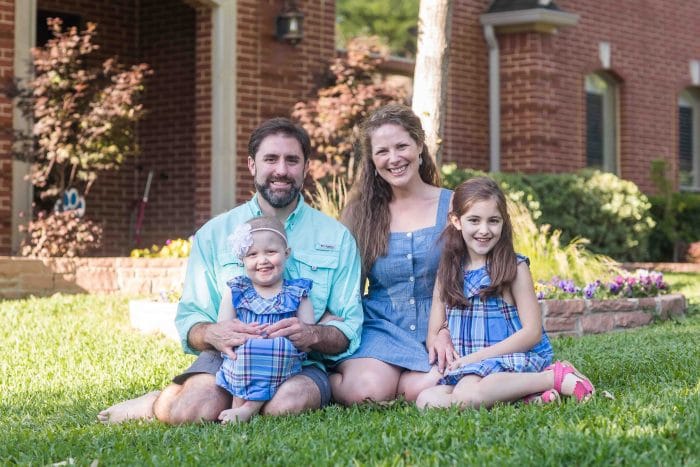
A New Nonprofit with Big Plans for the Future. By Michael Belvin & Patti Otte When Evie Belvin arrived, parents Katie and Michael Belvin were overjoyed; however, the doctors quickly swept Evie away for additional evaluation. It was in those initial days that the Belvins’ journey with Evie began. Evie spent 227 days in the NICU before finally being released in July of 2015. Over the next few years, Evie underwent countless overnight hospital stays, procedures, surgeries, tests and outpatient visits. As her health challenges continued, Evie’s medical care became the family’s top priority. Her older sister, Charlotte, was too young to fully grasp the gravity of Evie’s situation and her parents’ need to give extra attention to her little sister. Like so many siblings of children with special healthcare needs, Charlotte felt frustrated and overlooked at times. One day, Charlotte verbalized to her parents that she felt as if they cared about Evie more than her. Although that concern couldn’t have been further from the truth, Charlotte was indeed living in the shadow of her sister due to circumstances beyond the family’s control. Michael shared Charlotte’s worry with his good friend Chad Ray. The two discussed ways in which they might be able to help not only Charlotte, but other siblings facing similar situations within their own families. As Michael and Chad searched online for programs to help Charlotte feel less alone, nothing appeared outside of traditional therapy. The statistics they discovered were staggering: one in five children in the US under the age of eighteen has a special healthcare need, which meant that Charlotte truly wasn’t alone. In that moment, it dawned on them that the existence of young adults who had been through Charlotte’s situation was a real possibility—the challenge was finding them. And that’s when Michael and Chad came up with the idea for Shadow Shine, a nonprofit whose goal is to build connections between the siblings of children with special healthcare needs. They want to help siblings in the shadows feel loved and special by building bridges between families with the same dynamic. The nonprofit’s mission is to create a safe space for the siblings to have their voices heard through constant support, meaningful relationships, and leadership opportunities. “Developing something from the ground up is always tough, with no compass to guide you on the path, but it has been incredible to see the excitement people have displayed towards the idea of this organization and what it can accomplish,” states Michael. By design, the nonprofit plans to pair a high school aged sibling mentor—the “Scout”—with a younger sibling from a different family—the “Sidekick.” A unique attribute of the program is that both the Scout and Sidekick must have siblings with special healthcare needs. “Truly an ‘I have walked in your shoes’ approach,” says Michael. Shadow Shine is a grassroots, geography-based program. Michael and Chad want Scouts and Sidekicks to be able to easily interact and spend time together without distance being a factor. To date, the organization has relied solely on word of mouth at local schools, pediatricians’ offices, and children’s hospitals to spread the word about their brand-new nonprofit. The men enthusiastically share that they “have some incredible self-proclaimed dreamers on our board, and we could see Shadow Shine growing to help serve families across this country as time goes on!” Charlotte and Evie Belvin Shadow Shine held a kickoff event in March, at which time the Shadow Shine board shared their dreams for the organization with members of the community. Up until that point, their work had transpired behind the scenes. After the event, Shadow Shine began receiving inquiries from people wanting to get involved with the organization. States Michael, “We are excited to put together our first pairings this year, ideally in August as the school year commences. We are not setting a specific limit to the initial number of pairings right now, but we do want to make sure to nurture these initial relationships. We are also looking to hire an Executive Director to help guide the growth of the organization.” “The heart of Shadow Shine stems from a firsthand need experienced by our family and is rooted in the place we call home. The people of Richardson mean so much to us, so we wanted Shadow Shine to start in the community that has supported us throughout the years. We are also looking forward to building relationships and partnering with schools, counselors and physicians in Richardson,” states Michael. For more information about Shadow Shine and its mission, visit http://shadowshine.org.
Richardson 150th
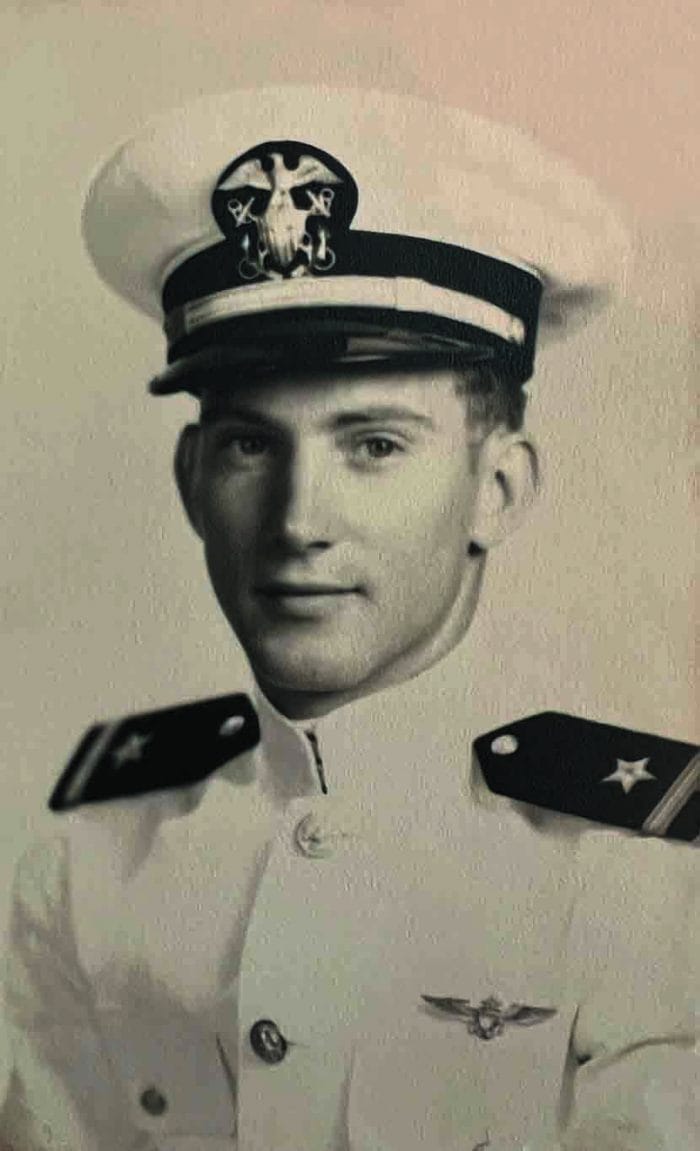
Celebrating Charles Smith, Richardson’s Very Own Centenarian By Patti Otte On September 24, 2023, Charles Smith will turn 103 years young. Mr. Smith’s mind is filled with vivid memories of a time when Richardson was mainly farmland and the best mode of transportation was the Interurban Railway. Mr. Smith is one of the oldest—if not THE oldest—citizens of Richardson, having been born in 1920. He still has a sharp mind and loves sharing stories of the past. To put his age in perspective, 160,000 people lived in Dallas in 1920, versus 1.3 million today, and eighteen presidents have served during Mr. Smith’s lifetime. Back then, Richardson was just a bedroom community of farmland and oak trees, with a half dozen houses in the area between Campbell, Arapaho, Jupiter and Greenville. Born in Richardson, Mr. Smith remembers walking from his grandparents’ house on Interurban Street south of Beltline, where he lived for a short time while his parents’ home was being built, over the Interurban railroad track to school. According to city records, the Interurban, an electric railway, commenced service in 1908 and ran north to Denison, south to Waco, southeast to Corsicana and west to Fort Worth. By 1910, 600 people lived in Richardson and the newly built (in 1914) schoolhouse Mr. Smith attended on Greenville Avenue eventually became home to the RISD administrative offices. The offices are still located there today. Thomas F. McKamy was Richardson’s first mayor, elected in 1925, and he owned the local Cash Dry Goods, another of Mr. Smith’s frequent stops in his boyhood. It housed the original Richardson library. In 1927, just before the Great Depression, Mr. Smith moved into his parents’ home at 324 Huffhines Street, which still stands today. The home looks just like it did then, with the exception of the now blue exterior; originally, the Smiths had it painted white. The area where Richland College now stands was “Roy Chick’s farm, prime dove hunting land,” according to Mr. Smith. He hunted there often in his youth. During those early years, Mr. Smith met a girl named Rose Ann Julian, who would eventually become his bride. He and Rose Ann were classmates and both graduated in the Class of 1938 from Richardson High School. According to Mr. Smith, Rose Ann’s father was “the best cotton and wheat farmer in Dallas County.” Around that time, Mr. Smith’s dad owned Western Auto in McKinney, where the young Smith worked. Mr. Smith recalls riding the Interurban from McKinney to Richardson after work. He’d then “clean up and get the car and drive over to Addison to pick Rose Ann up at her farm.” Fun fact: Mr. John Elbert Julian owned the farm where Addison’s school was located and that building is now the Magic Time Machine on Beltline Road. Mr. Smith married Rose Ann on March 11, 1944, while he was on leave from the Navy. Prior to their marriage, Three generations of Smith men Mr. Smith served his country as a Naval Aviator, Lieutenant Junior Grade, during World War II. He joined the US Navy in September of 1942 and went to pre-flight school in Athens, GA. Now known by his military nickname, “Smitty,” he transferred later that year to Grand Prairie, where he started flying Stearman airplanes with open air dual cockpits Smith Home in Huffhines St. After a transfer to Pensacola, FL, in 1943, Smith did his advanced flight training in a North American SNJ, widely known as the Yellow Peril for its yellow color. He earned his wings in June 1943. He moved between Florida and Georgia a couple of time to receive Instrument flight rating training. He soon received orders to go to Alameda, CA, and in March 1945, he was transferred to Honolulu, HI. During the war, Lt. Smith was a co-pilot on an R5D—a 4-engine plane—delivering personnel and supplies from Honolulu to the Philippine Islands. Thankfully, he never saw any combat as the Hawaiian Islands were secure. Mr. Smith thinks back and remembers that he “never saw so much water in [his] life.” World War ll Memorabilia Naval Aviator Certificate Mr. Smith can recall the families who built Richardson, one of which was the Campbells. Passersby can still see JW Campbell’s home on the northwest corner of Arapaho and Plano Roads. It’s now barely visible behind a jungle of trees and overgrowth, but Mr. Smith remembers it well. He also remembers Richardson being known as “the community with the most Ph.D’s.” He and Rose Ann were founding members of the Canyon Creek Country Club back in 1963. At the time, a membership cost $15-18 per month. They loved golfing and were members until 2000. Mr. Smith lost his beloved Rose Ann in May of 2001. The Smith’s 50th Anniversary When asked to describe his dad with three adjectives, Mr. Smith’s son Charles, Jr. said Mr. Smith is steadfast, honest and trustworthy. His grandson Jason, who lived with his grandparents for many years and then next door to them later, describes him as kind, generous and loving. The man I had the privilege of meeting fit those descriptors well. When a Richardson reporter interviewed Mr. Smith recently for Richardson’s 150th celebration, Mr. Smith told him he thought he’d live till at least 105. For all of our sakes, let’s hope he lives even longer as he still has so many stories to share. Charles Smith, Class of 1938 Rose Ann Julian, Class of 1938 Class of 1938 high school reunion Richardson Highschool girls’ basketball team Graduating class of 1938 Keepsake photo of Charles and Rose Ann and classmates Author’s Note: The remarkable part of this story is that almost every single historical references included here came directly from Mr. Smith. He can still vividly recall tiny details of the past—like a talking history book—and I feel so privileged to have had the chance to share a small part of his story with you.